
Marcia's Musings: When We See Each Other
/ Guest UserOf late, my mind meanders the mysterious corridors of connection. How do lovers attract each other? How do teachers and students home in on each other? What causes friends to decide on each other for a lifetime? Why do some business partnerships last a lifetime and others go up in flames?
It would break the boundaries of the compact between us for me to explore the exquisite intricacies of how lovers locate and then cleave to each other. (For that, you will have to read my novel.) Each of us carries within us our own childhood-to-grave friendship stories. As for business partnerships, I could speak volumes – suffice it to say that I was blessed with a great one – brilliant, funny, challenging, too – and one day, she and I may share that journey in a series of lectures.

For now, I concentrate on the relationship between teacher and student, one I’ve known in the academic classroom and on the mat.
As an adjunct professor of journalism at the University of Minnesota for several years in the 1990s, my co-professor and I often speculated on the whys: Why does one student warm to a professor so deeply and another maintain a certain coolness the whole semester? Why does one faithfully meet homework requirements, another assume a “duly-noted” posture, and yet another attempt, week after week, to squirm out of assignments – or, worse yet, blatantly ignore them? And finally, what creates that most-magical of bonds when students and teachers freely learn from each other and with their brave voices admit this is so? To this day, one of our long-ago students keeps in touch with me – now a skilled published writer and speaker with an excellent mind (which always was present), I hold awareness that the student may have surpassed the teacher, perhaps several times. I marvel at the joy of this feeling.

In the days when we yoga teachers taught face-to-face in the studios, the bond with students was close, in distance and in energy. The ability to see each other and learn how bodies step into poses, breathe, and meditate occurred in the state of immediacy, feedback written on students’ faces and in teachers’ words. With the emergence of virtual classes, caused for the most-unbelievable of reasons, a pandemic, this bond fractured. Without being able to see each other in person, or at all with so many at-home yogis blocking their video, both student and teacher haltingly reach for each other. It feels similar to the childhood game when we blindfolded one player who had to hesitantly find the others.
Live-streaming yoga classes delivered positive aspects, of course. One could roll out of bed and tumble onto the mat to practice in pajamas. One could take a break from at-home work hours and sneak in a class in the middle of the day rather than before or after previously normal work hours. Worries about hair, traffic, yoga outfits evaporated. For teachers, the ability to deliver the practice despite a shutdown gave rise to new challenges – good ones – and crashed through any complacency we’d developed.
And yet. Nothing replaces the bond of being in direct contact with each other, whether lovers, friends, business partners, or students and teachers. As teachers we are unsure if our cues are adequate for virtual students because we can’t see their bodies. We shy away from teaching new aspects of poses – or even of teaching any parts of certain poses – because we hold evident that safety comes first. Students don’t call out requests, questions, jokes. We wilt without the banter, the interplay of sharing of thoughts, feelings, and emotions, the lingering after class to share...whatever.

What we’ve learned in this long, lonely period of virtual delivery is that yoga’s tenet of “direct experience” still stands after eons and after this pandemic. This is why in-person classes multiply weekly on our schedules. Are you ready to rejoin yoga at its roots, on the mat and in community with teacher and other students? Are you ready to resume human connection in the sacred spaces Green Lotus offers, recalling in the not-distant past the sheer joy and exhilaration found in the mystery of direct relationship? We teachers are. We are calling to you.

Earlier this month, I led a training in Yoga Nidra. My heart cracked open. Emotions and feelings flowed. What a gift for us all, students and teachers alike. In sharing our inner life and our hearts’ deepest longings, we find equality.

Hey, God, are you there? It’s me, Marcia. Usually, as I sit on my cushion, I listen for and to you. As you know, sometimes, I call you God, other times Universe. Other times, Goddess. In a long life with you, I learned you hear and answer to many names. I know you’re there.

Today, I pay tribute to a man who learned to live in “the world of and”, who embraced change, a meaningful space in the philosophy of yoga, particularly in the therapeutic approach of Yoga Nidra, and in Buddhist psychology.

At this time of the year, we often feel tender: tender toward other people, tender toward the natural world and all its creatures, tender toward life itself, tender perhaps even toward ourselves. Images both sweet, like a dog and cat sleeping together, and horrifying, like the pain and suffering borne by innocent civilians on both sides of a war, elicit tender thoughts.

The headline for this soul-baring sounds faintly geopolitical and sinister. It’s as though Hercule Poirot stands on deck to solve a great mystery. This situation requires no famous investigator, however. What is unfolding is the normal flow of the sweet river of life and a happy, joyous bend in it. I can’t wait to tell you this long-held secret.

This thought plagues me in a time of impersonality. We sit in offices in our private homes, alone or on endless Zoom meetings that I overhear from my home’s lower level when my children or friends stay over. Oh, yes, they see faces. The sharing, though, is all business…

When the hammer fell, or more accurately the surgeon’s scalpel, and a non-life-threatening complication ensued along with an extended rest at-home, legs-elevated time, I faced down this question: As I age, how will I fill my time and engage my mind and body?

With Barbie, there emerged a more complicated relationship. She didn’t look like anything I witnessed in the strong flesh-and-blood women around me, and it’s only by some miracle that I didn’t start to body-shame myself. I know many others did in the years before we talked about concepts like the male gaze and how it distorts the way women view themselves. This sets impossible standards that maim and warp and cause real illnesses in both men and women and their relationships, however they come together. Especially in the first decade of Barbie’s existence, her white, white world left out everyone else, which matched reality, until the great movements of the late ‘60s and ‘70s caused Mattel, Barbie’s corporate owner, to succumb to the pressure to “show dolls more like me and my daughter”. I’ll get back to that in a minute.

I want to be as truthful with you as I am able. Acknowledging my anger, exploring its roots, and deciding where and when to act feels good…

I’m happy. Right now, I can’t believe how often I am happy. The best news? I no longer wonder how long this joy will last or how to extend it. I’ve come to see that when I’m happy, I can just be in that happy place for however long it lasts.

The lingering effects of this concussion force the Energizer Bunny to slow down and remind me of my True Self which aways craved quiet and stillness. I nap, listen to books, and more deeply embrace internal practices that support my healing.

I walked out the front door of my Florida home, stepping into a sky-blue-bright day blazing with heat, only to find a chicken turtle clinging to the edge of my paver-patterned driveway. As I approached, thinking how much it looked like a painted turtle our children once raised, it appeared more lethargic than frightened.

Of all the paired human emotions, love and loss cause the most challenge for me. As an only child raised and nurtured in the embrace of two warm and closely knit families, I dreaded the passage of time with its inevitable march toward separation caused by death….

Inner wars and conflicts never pass without struggle. Whether the focus is on love, relationship, food, exercise, money, or anything else, once the inner struggle begins, we easily bog down, mired in the mud of indecision and inaction. Ask me: I’m expert on this one.

Trusting your heart demands not only deep listening but also deep feeling. You cannot think your way to discovering your heart’s deepest longing. You must hear and feel it and then give it voice, clearly and compassionately….

I started to examine how the repetitive, mundane tasks of life – whether working on the farm with all it entailed or, later, attending to my own home with its demands for care and payments – felt in my body. The more I focused on the chore, the more aware I became of the emotions and sensations emerging.

This is a song of life. Like most songs, and all stories of life, it contains both joy and sadness, and it begins like this.

The yoga Vedic teaching to speak the sweet truth – Satyaṃ brūyāt priyaṃ brūyāt in Sanskrit – invites us to use exquisite subtlety in communicating the truth which virtually demands that we pause before speaking. The teaching goes on:

Floating when depleted proves to be a strong Rx, a natural one, too. You don’t need to be on an ocean- or river-bound ship to do it, either. Floating, I’ve come to realize, comes in many versions and leads to a more- restive state of mind…


In her cheerful, quiet room, I sit as close to her hospital bed as possible, my hand on her bony shoulder, and turn my full attention to her. Even as she sleeps, I resist the phone….

All day long, I’d roamed the combative realm of divided attention: sneaking in an answer to a text or two while in Zoom meetings; answering phone calls from colleagues and friends while writing emails or editing articles, and cramming some non-descript food into my hungry body while reading business documents. I felt depleted and alienated. Split attention takes a toll on us as we now well know, giving lie to decades of training people how to multi-task.

There comes the time when we take deep stock of our lives. If we’re living a life grounded in the present and in the body, we will have taken stock frequently throughout the entire arc of our lives. What does it mean to take deep stock? When do we know it’s time to do so? How do we do it?

Sweating often communicates the state of our emotional well-being. How many times has a friend, partner, child, spouse said to you, “I broke out into a cold sweat”? How many times have you experienced the cold sweats yourself?

The feeling of happiness moved throughout my body like liquid gold, starting at my heart center. I understood what happiness feels like for me. Because I stayed present the thought was no longer just a thought – it morphed into a physical sensation….

When grief comes calling, it rarely arrives alone. Sometimes guilt accompanies it. It’s complicated and many-layered. Sometimes relief does – the innate gratitude that the loved one no longer suffers – and inadvertently triggers more guilt….

It wasn’t always easy to recognize positive outcomes in the age of the pandemic, given the brain’s preference for negative thinking. Especially in the darkest days our community faced together, all I focused on was absorbing the shock of the “unseen enemy” and its relentless assault…

My mother’s younger brother died a few weeks ago at age 88. One minute he sat chatting from his chair with his daughter, seeing her on Facetime, and the next he slumped over quietly. He left this world on the long, last exhale in an instant without noticeable stress or pain. In what certainly stands as a sign of these times, my cousin virtually witnessed her father passing, his energy moving from one dimension to the next in full digital view.
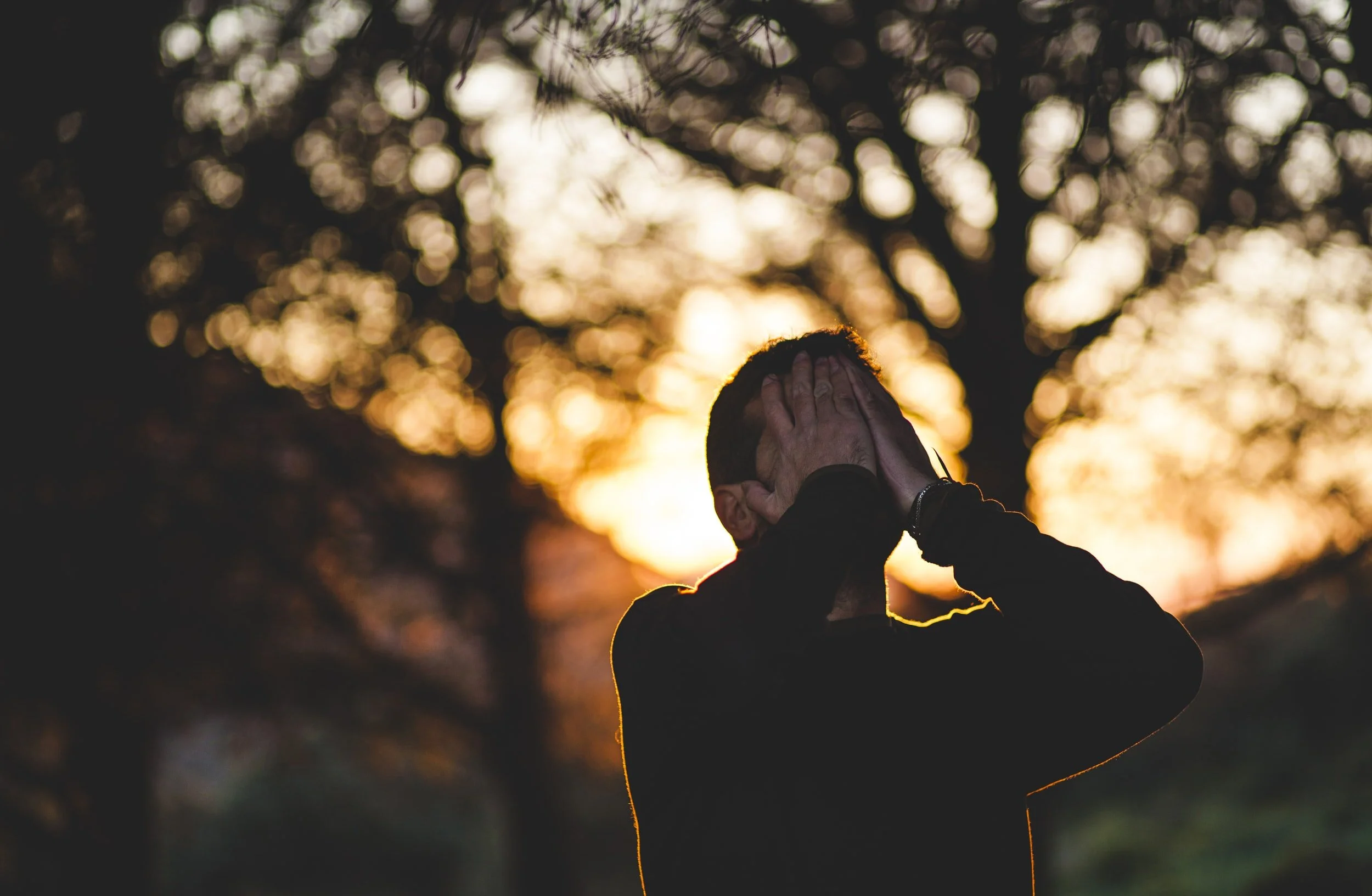
Grief arrives for many reasons. We often identify the death of a partner, spouse, friend, child, parent, or colleague as the deepest form of grief – and rightfully so. We’ve witnessed the pain of this kind of grief etched on survivors’ faces.