Chair Yoga: Grounding Yourself in Eagle Pose (Garudasana)
/ Rebecca AirmetBy Merry Beth Freienmuth — Last Updated: May 14, 2024
The joy with which we greet spring often throws us into an energetic frenzy, leaving us a bit adrift and ungrounded. One of my “go-to” chair yoga postures to reconnect me to myself and the earth is Garudasana (Eagle Pose).
The standing version of Eagle is an intense balance posture that activates the root chakra (grounding energy) and focuses the mind. Practicing Garudasana in a chair gives your mind and body many of the benefits of the standing version. Practice this pose outside with birdsong in your ears and a little breeze ruffling your “feathers” for a springtime treat.
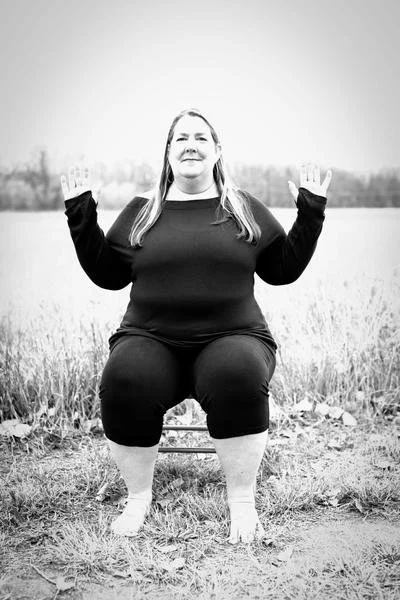
Start in seated Mountain Pose
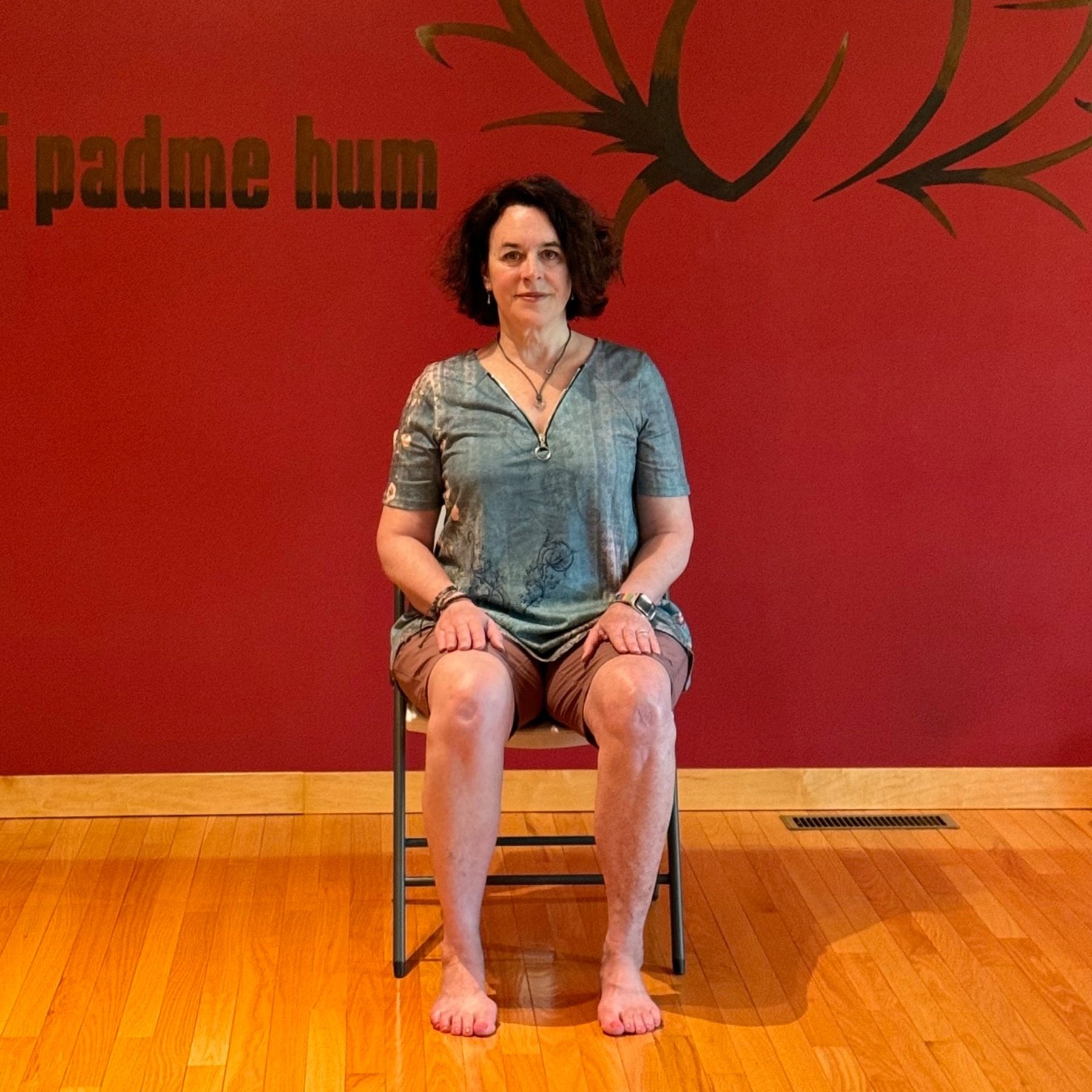
Sit slightly forward in your chair, finding your tallest posture and drawing your navel towards your spine
Firmly ground your feet on the floor
Tip: if your feet don’t fully touch the ground, put a folded towel or books under them
Palms down on your thighs, take a few deep breaths
Move into Eagle Pose
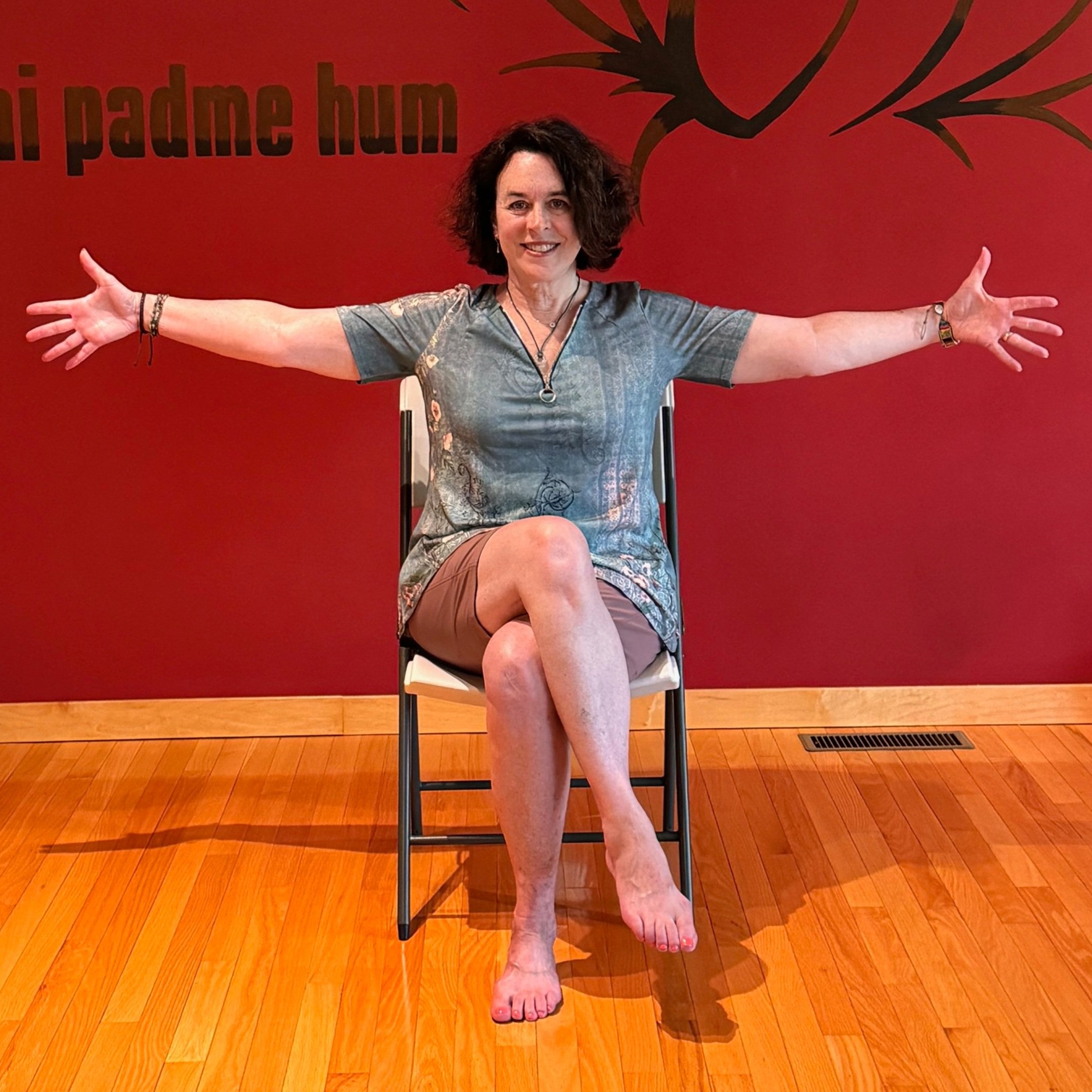
Staying grounded in your right foot, cross your left leg over the right, keeping your knees close together
Tip: Cross at the ankles if it is uncomfortable to cross at the knees
Squeeze your thighs together, drawing your left ankle towards the lower right leg
Inhale your arms open to the side like eagle wings
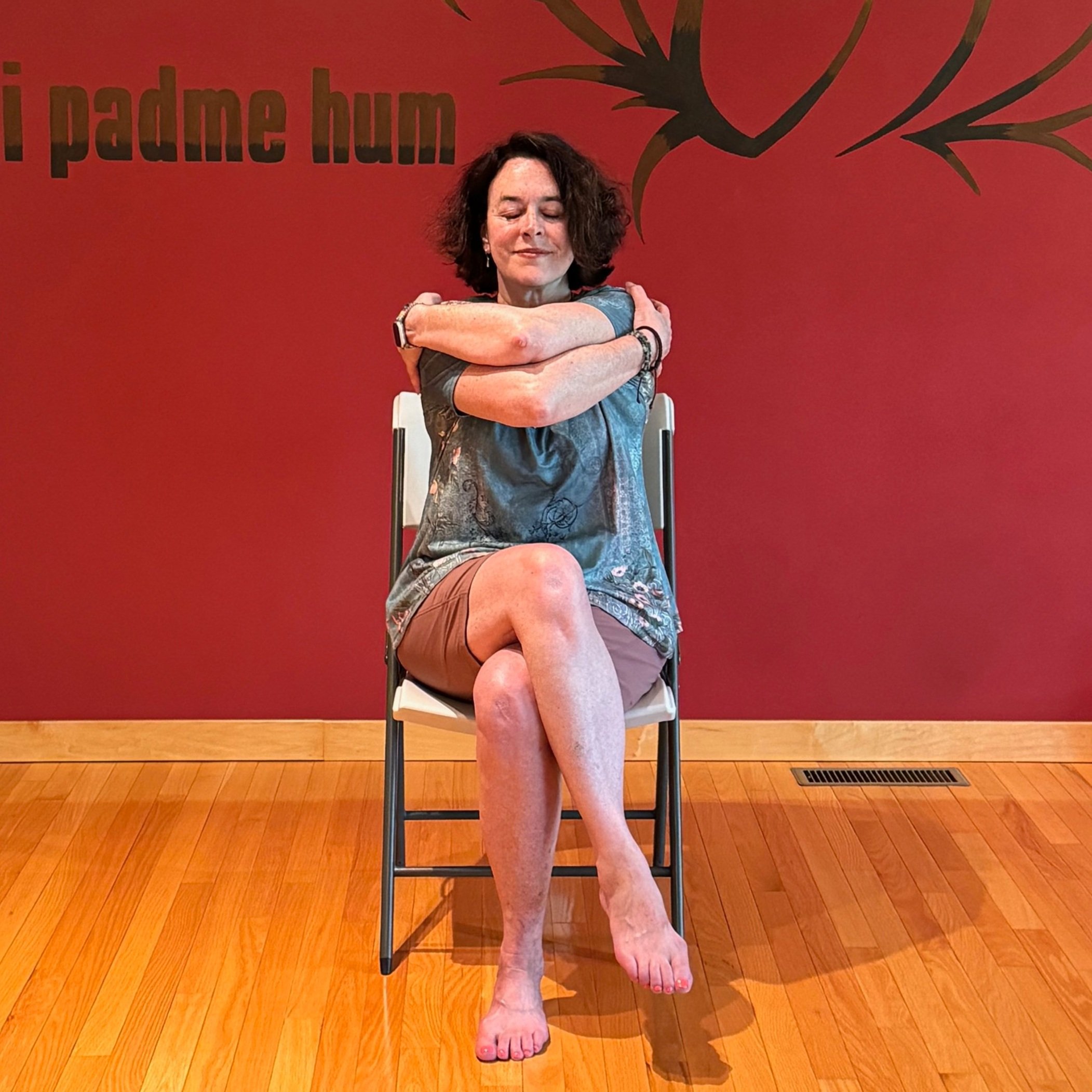
Exhale right arm over the left, crossing as close to the elbows as possible
Bring your hands to opposite shoulders, walking the fingers towards your scapula in a self-hug
Take five deep breaths in and out of your nose, continuing to squeeze your legs together
Release
To release, inhale your arms wide and unwind the legs
Exhale as you return to seated mountain pose
Take a few breaths, then repeat on the other side
Variations
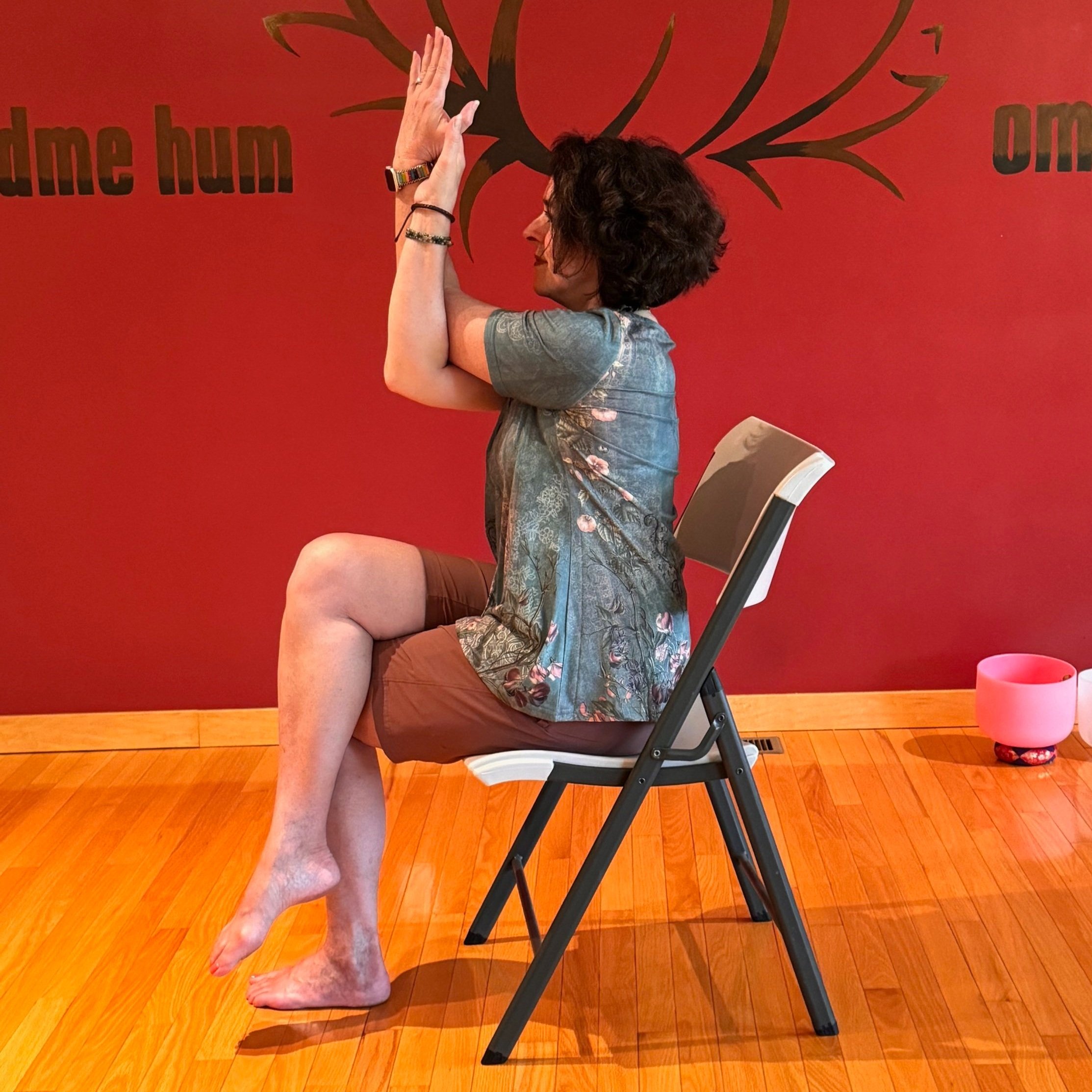
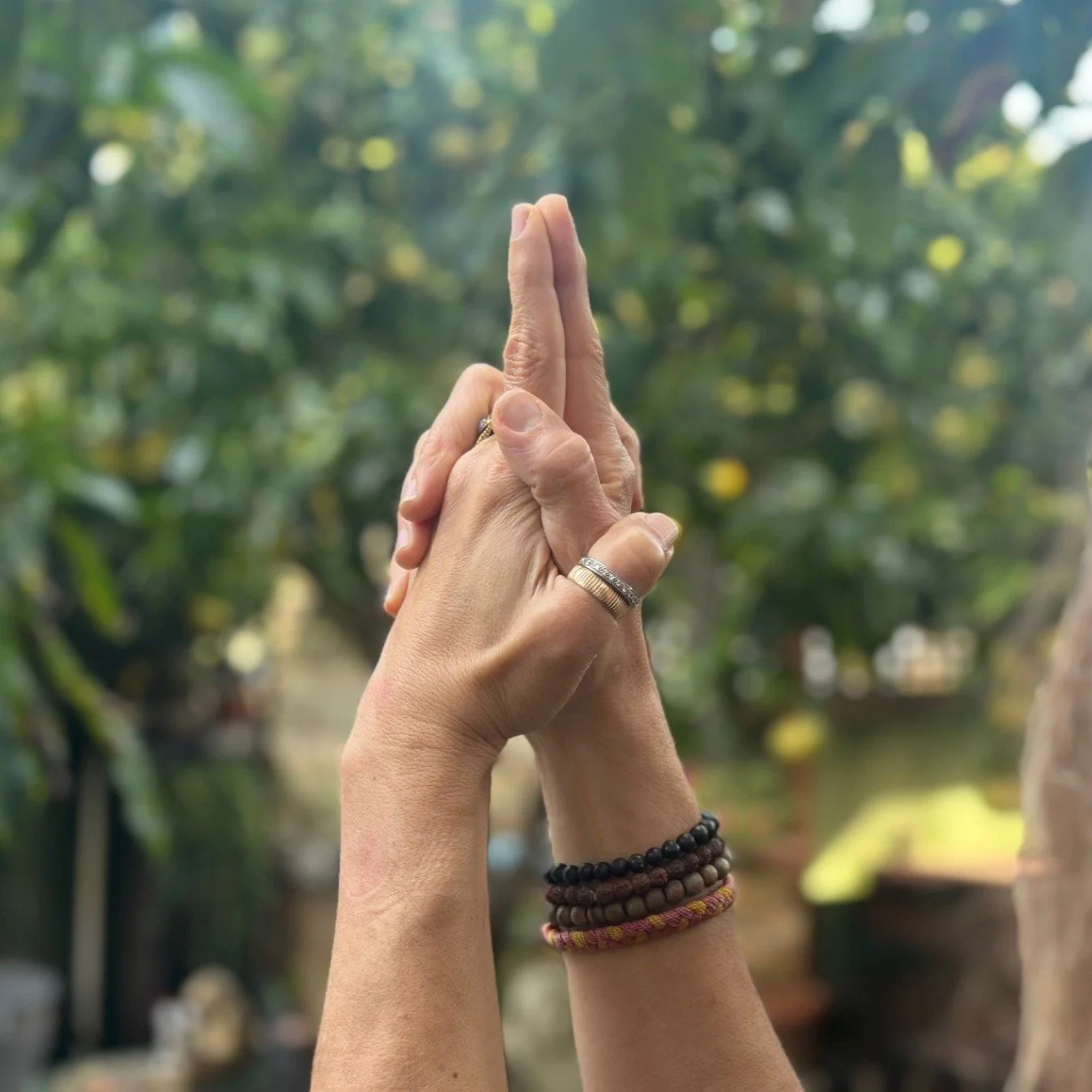
Wrap arms and hands, drawing elbows up and hands away from face
Fold forward, keeping your spine long
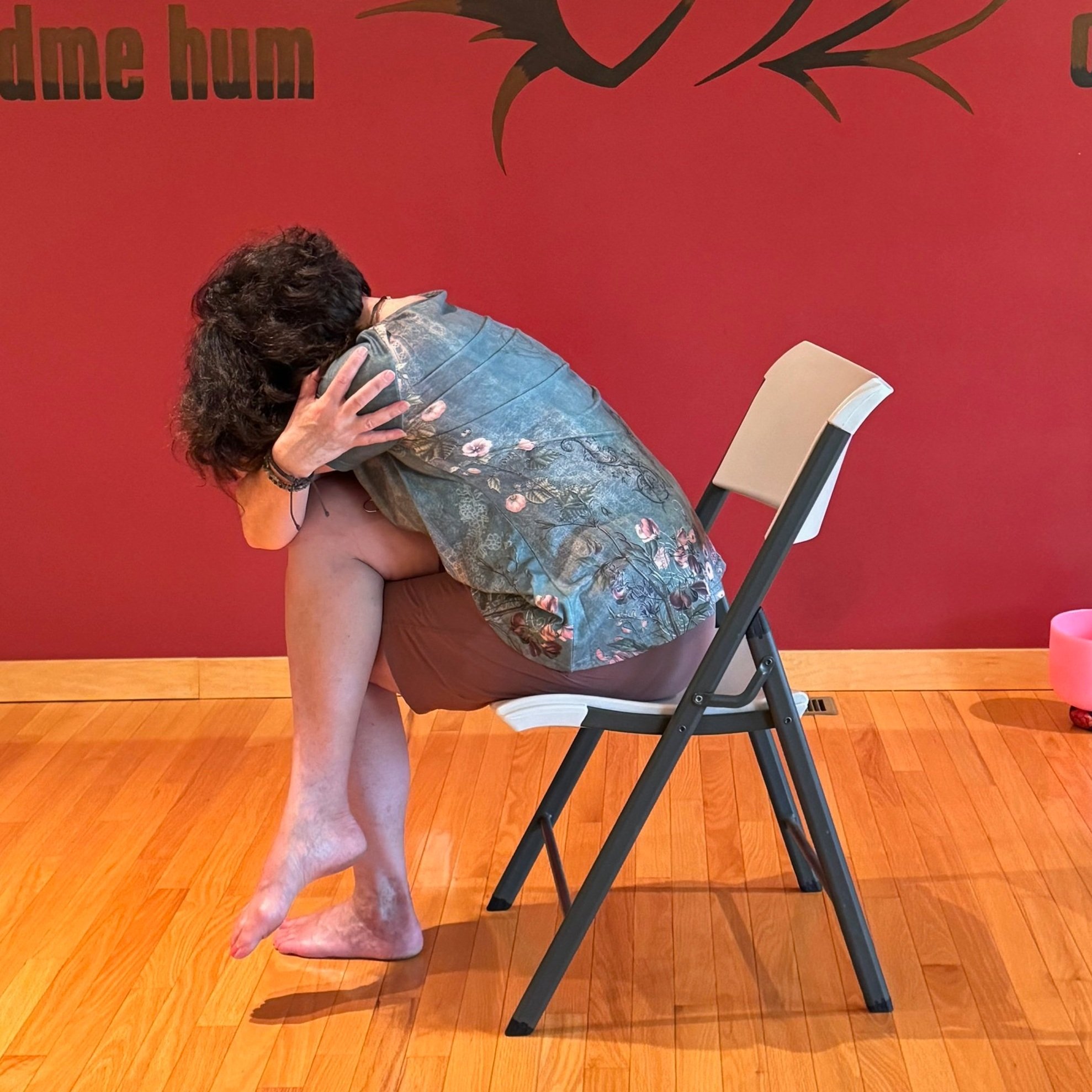
Not only will you feel more grounded, but you will also enjoy a little stretch in your shoulders (lift the elbows) and a gentle opening in your back. With the chair to support you, closing your eyes and turning your drishti (gaze) inward heightens the awareness of your body in space and more fully grounds your mind, body, and spirit.

Merry Beth is director of Green Lotus' Yoga Alliance-certified school and a senior faculty member. She has been practicing yoga since 2000. She found the physical asana practice to be the perfect transition for her aging body that could no longer tolerate a classical ballet practice. She taught ballet for more than 15 years, then she began teaching Body Flow, Pilates, and yoga in 2002. Merry Beth also has experienced the more subtle benefits of yoga; it has given her the strength and balance to navigate a full-time career in corporate America and to raise her children into adulthood. Now the sole owner of Green Lotus, she devotes her time to teaching and supporting the business.

What do you do if you find out that your bone mineral density is low and you may be on the path to osteopenia or osteoporosis? Weight bearing exercises can rebuild BMD and slow or reverse the process. Luckily, yoga can play a crucial role in preventing and managing BMD loss. By combining strength, flexibility, balance, and mindfulness, yoga offers a holistic approach to bone health.

In today’s fast-paced world, experiencing stress and anxiety is as common as crossing the street. Many people are turning to alternative healing practices like Yoga Nidra, an ancient meditation technique that offers profound benefits for mental, emotional, and physical well-being…

As a young person I grieved the life I wasn’t able to have because of my spine issues – I suffered considerable pain for years. The way out (which was actually the way in) allowed me to release my pain, straighten my scoliosis, and transform a multitude of patterns that caused me suffering. My practice of yoga and being mindful of my spine has transformed into a great gift.

In our post-pandemic world, we have grown used to not being touched. Friends hug less, acquaintances and strangers are less likely to shake hands, and yoga teachers have significantly reduced their hands-on guidance for their students. Is it time to bring back the option of touch, with student consent, in a yoga class?

When we are scared, stressed, or startled, our heart starts to race and pound within our chest. It is an instant feeling, unlike the increased heart rate that comes gradually as we exercise. Luckily, yoga provides us with a heart-healthy, calming pose for just those moments…

You’ve probably heard the terms core conditioning and training, but do you know which muscles make up the core? A strong core can help you move more efficiently and avoid injury. Use these yoga poses to strengthen your core in as little as 5-10 minutes a day!
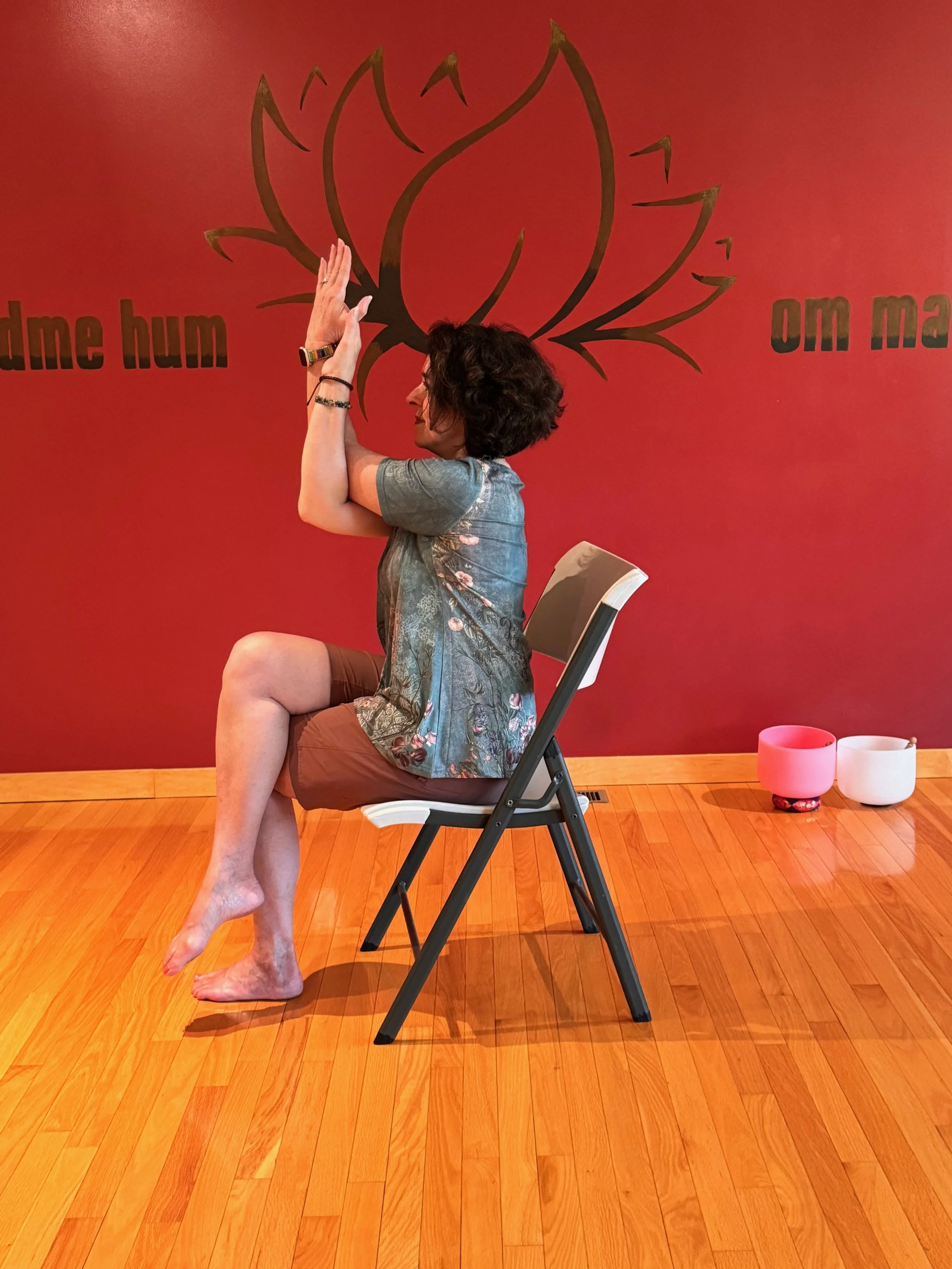
Practicing Garudasana (Eagle pose) in a chair gives your mind and body many of benefits without the intensity of the standing pose…

If you are new to yoga, you might not know the term Sun Salutation. If you are a regular yogi, you’ve likely not only heard of it – but also have been guided through many in your yoga classes. Often, we come to yoga class and do whatever the teacher says, sometimes not even really knowing the “why”. In yoga, understanding the “why” behind things can be just as illuminating as the “how”. Understanding the logic can help facilitate deeper personal growth and thus, a more robust yoga experience.

Partner yoga, at the very least, is simply fun - and can be so much more. Communication is the most important tool during a couple’s practice. Unlike a traditional yoga class where you quietly focus on your breath and turn inward, in partner yoga you focus on the other.

For some, private yoga is a steppingstone to overcoming their discomfort of being a “newbie” in a group yoga class. For others, it's a convenient home workout that's customized to their needs and energy levels. And sometimes, a private yoga class is a safe place for students to move their bodies, ease their pain, and release the week's stress.
Seated cobra pose is a great way to counteract the effects of sitting at a desk or computer all day and can be as simple as doing a few repetitions every hour or so while at work.
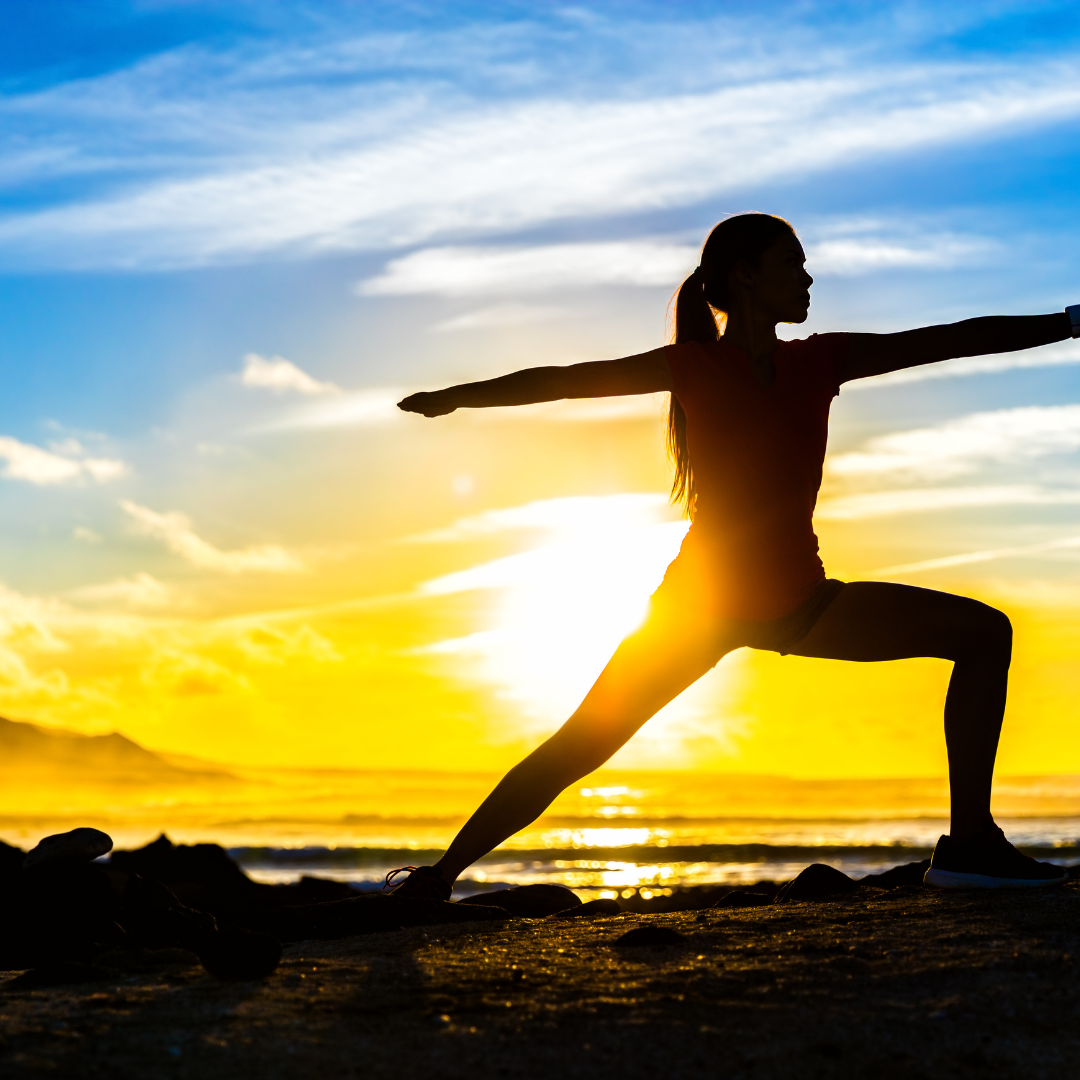
The qualities that we cultivate in our physical practice seep in through the cracks, into our energy body, our emotions, and our mental state. When we practice the variations of Virabhadrasana, we embody the strength, ferocity, and the fearlessness of a warrior.

Because of its funny name, the Downward Facing Dog pose is one of the most well-known yoga postures. Even people who have never done yoga recognize it. You can find Downward Facing Dog in most yoga styles, which means you’ll see it in most yoga classes.
One of the reasons it’s so common is that Downward Facing Dog is an excellent posture for transitioning from one pose to another. It’s used so frequently that it’s considered a foundational pose in our modern yoga practice. That doesn’t mean it’s easy. If you’ve struggled with Downward Facing Dog or find the posture uncomfortable, read on to learn more.

The Moon Salutation, known in Sanskrit as Chandra Namaskar, is a series of flowing asanas coordinated with your breath. In contrast to Sun Salutations (Surya Namaskar), which build heat, Moon Salutations foster cooling.
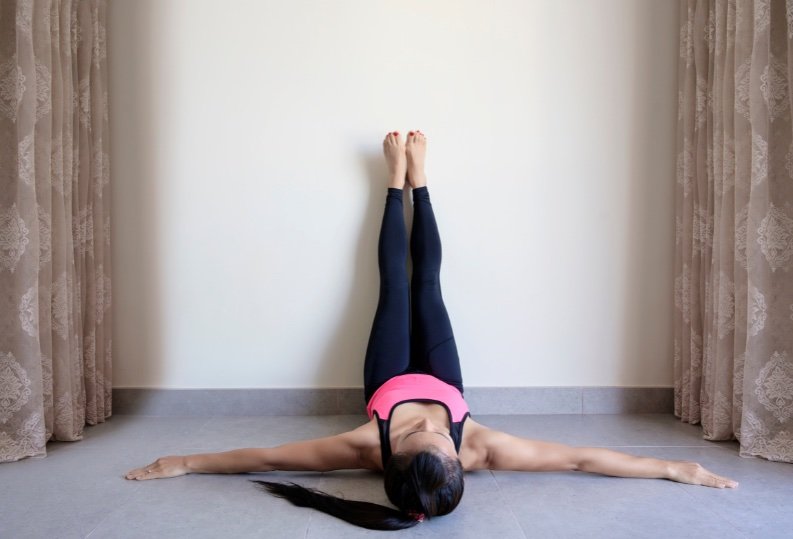
Viparita karani: You probably know it as Legs Up the Wall pose and, chances are, you’ve enjoyed this relaxing pose at the end of a gentle or hatha yoga class. This posture may look simple – and even feel simple; however, there is much more to it than meets the eye.

The ancient art and practice of the 8-limbed path of yoga, of which pranayama is an integral branch, focuses on this three-part connection of body, mind, and breath (or spirit) - three integral components or ingredients that lead to a solid, growing, and focused yoga practice. These three facets of our practice are undeniably connected, interwoven, and entangled even if we are not consciously aware of their triangulation with each other.
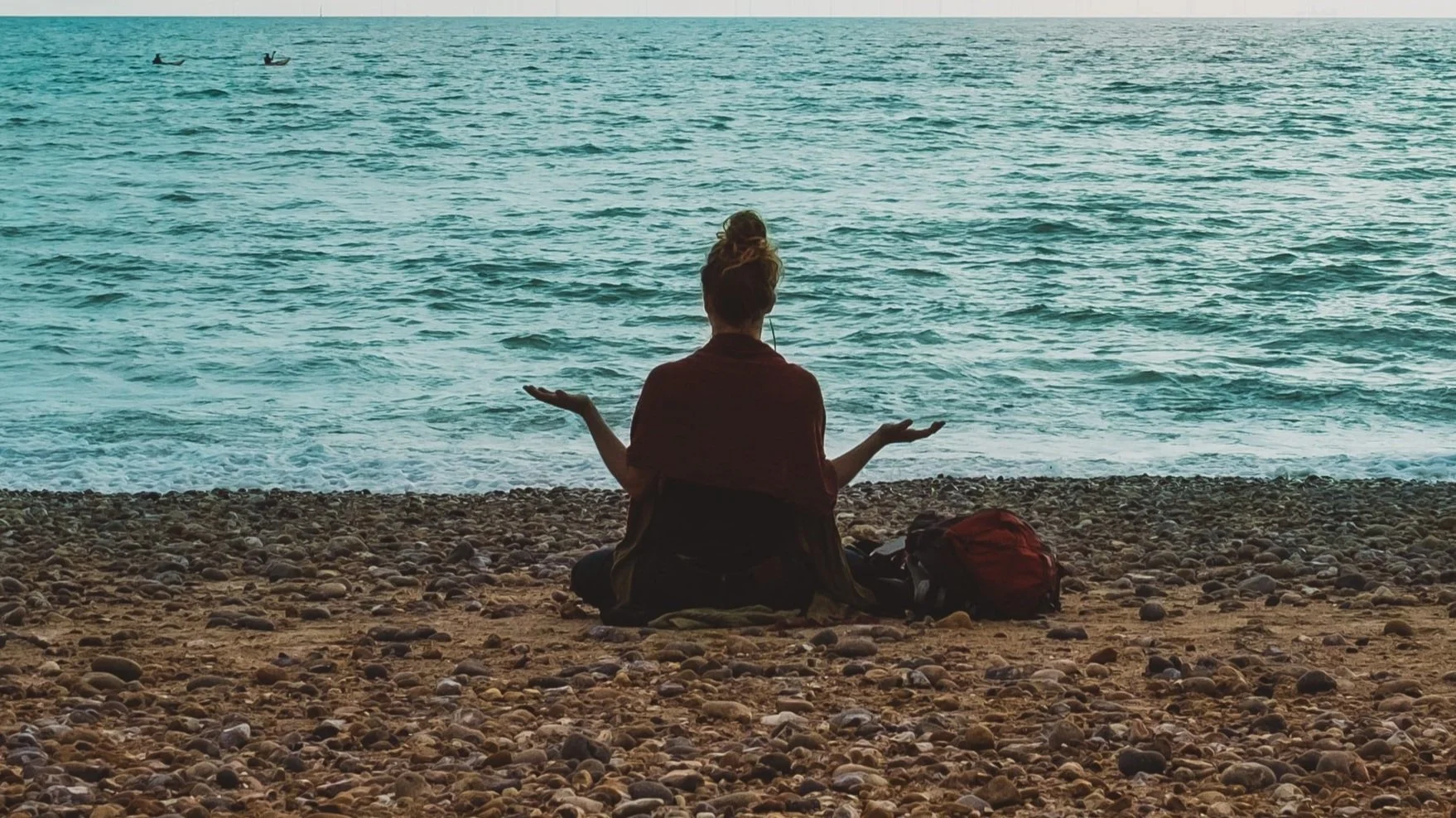
In yoga and meditation classes, we’re often asked to have the intention of grounding or are cued to ground ourselves. Most of us, correctly, hear those as an invitation to connect more deeply to the earth. What exactly does that mean?

Somatics uses gentle movement patterns to shift the central nervous system and create new muscular habits. These movements are performed with conscious awareness and focus on the internal experience of the movement. Somatics can help reset natural movement patterns.

There are many parts to breathing. However, on a day-to-day, moment- to-moment basis, we connect most simply and understandably with our inhalation and exhalation. It happens naturally. We breathe in and out, all day and all night long. Yet, have you ever wondered what you might find if you were to pause….

Much as we take in food, water, and oxygen, we also take in sights, sounds, and other sensory information as well as subtle energies and impressions from our environment. Our senses “feed” our minds and spirits, much like food feeds our bodies. If we are to truly cleanse, we must bring attention to what we feed our minds and spirits.
One of the many reasons a yoga practice supports physical well-being is because asana and pranayama build internal heat in nearly every kind of class that includes movement….

According to Ayurveda health-care philosophy, oil pulling draws out toxins in your body to improve oral health specifically and to improve your overall health.

Abhyanga is the Ayurvedic practice of self-massage, which can nourish and cleanse our external body just as we cleanse and nourish internally with clean foods and new eating habits.

Prior to lock-down, I walked regularly, often with Sally, our Jack Russell/Australian Shepherd mix. I enjoyed our walks (and Sally always enjoys her walks!), often leaving my phone at home, the better to enjoy our time together. Although I was never rushed, and I enjoyed the sights and sounds of nature, there was always “something” to get home to do, a “next thing on the list”, My appreciation and enjoyment were of the “walk-thru” variety, and my mind might often wandered….

Sound Healing is a modality that utilizes frequencies produced by instruments to support participants in altering their state of consciousness for an intended purpose such as reaching deep state of relaxation or working through suppressed emotions or simply the release of stored stress.

I assert that pranayama is the single most accessible, practical, and effective tool available to reduce stress, energize, bring about calm, and improve our overall well-being. Period. We can go without food for weeks, without water for one to two weeks. We start to hallucinate three to four days without sleep, yet the lack of breath becomes fatal after only a few short minutes.

Tai yang is one of the points along an energy meridian. Self-massage that includes this point increases blood flow to the eyes and can help reduce the pain of headaches. It is easy, without side effects, and safe to do.

2:1 Breathing is a relaxing and cleansing practice. We begin by bringing balance to the breath, inhaling and exhaling equally. With each breath cycle we extend the exhale a little longer until the exhale is twice as long as the inhale.